Monday, February 01, 2010

Favorite All-Time Recipes: #1 Szechuan Chicken

Happy 2010, and happy February! I know I've been away for some time, but I am back, and full of ideas and visions for the new year of blogging! So - let's get started!

It seems fitting to me somehow for my first blogpost of 2010 to be focused on one of my favorite all-time recipes; szechuan chicken. I credit this recipe to awakening the fire in my soul for good, flavorful food presented with love and inspiring me to be more adventurous in my palate, which is ultimately what drove me to farming. This recipe is one of dozens that I see as my hallmark recipes - recipes that have shaped me as an eater, a cook, a farmer, and person that tries to live intentionally. This year, I want to share several of my favorite all-time recipes with you - the first installment is Szechuan Chicken.

One of my mother's friends Karen was an aspiring gourmet cook around the time I was 10 years old. Since she was single, she generously chose our family to share her new-found skills with - thank goodness! Researching it even just a little bit taught me that the old spelling of the province where this fiery cuisine originates is Szechuan, but in recent years, the spelling has been changed to Sichuan, so I suppose that I should be proper in calling it Sichuan chicken. However, my mom's recipe card clearly shows the spelling as Szechuan, and since I respect tradition, I'm gonna stick with what I've always known it to be.

I clearly remember Karen hauling all the ingredients into our kitchen, preparing all the yummy and exotic (to me at the time) smelling sauces, then the final tossing of it together and spooning the mixture over hot rice. YUM! In my adult years, I tried to reproduce this recipe based almost completely on my memory of how it smelled, since I didn't know if the recipe had ever been written down. To say the least, my attempts, though tasty, always fell short of my taste memory. That is until I went home to Denver for my Grandma's funeral this past July. I inherited her recipe box, and was pleased as could be to find that my mom had written down the recipe for
my Grandma! Now that I had the crucial ingredient list, I couldn't wait to make it! I was thrilled to find that with the first mixing of the sauces, my taste and smell memory was triggered and the result was exactly as I remembered it. What a boon! Now I could tweak it and play with adding flavors, and what I have here is the recipe I'm currently settling into. Thanks, Karen, for the original inspiration - thanks, Mom, for writing it down - thanks, Grandma for keeping it safe for me to find, and thanks, Spencer for going to see your brother in China and experiencing the peppercorns! Enjoy! It is sure to become one of your staples as well!

Szechuan Chicken:
Serves 4
  • 1 pound boneless-skinless chicken meat (thighs or breasts), cut into bite-size pieces.
  • veggies you like (blanched broccoli, snow peas, eggplant and carrots are great)
  • 2 bunches scallions, sliced into 1-inch pieces on the bias
  • 1½ T. chile paste (like sriracha, sambal oelek or chili garlic sauce)
  • 2 cloves garlic
  • 2 inches ginger
  • soy sauce
  • sherry cooking wine
  • sugar
  • vinegar
  • sesame oil
  • cornstarch
  • dried red hot Thai chiles
  • Szechuan peppercorns
  • Grapeseed oil, or other oil for cooking the chicken
  • rice for serving

The 4 sauces - mix together separately in 4 separate bowls, they will be added one at a time to the cooking veggies and chicken:
  1. Whisk together 3 T. soy sauce, 3 T. sherry, 2 tsp. sugar, 2 tsp. cornstarch. This is the marinade for the chicken.
  2. Blend 1½ T. chile paste, 2 cloves garlic, 2 inches ginger - both minced or grated.
  3. Whisk together 2 T. soy sauce, 2 T. sherry, 3 tsp. sugar, 1 T. sesame oil, 1 T. vinegar.
  4. Whisk together 2 T. water and 2 tsp. cornstarch.
Marinate chicken pieces in sauce #1 for at least ½ hour, but can sit in the refrigerator, covered, overnight.

Heat 2 T. grapeseed or other oil in a hot wok - on high. Grapeseed oil has a high smoke point, so is great for using with high temperatures.

Strain chicken off of marinade - discard marinade. Add to hot wok all at once.

Stir immediately and allow the chicken to cook through while occasionally stirring - this will only take around 5 minutes.

Be careful of spattering! When chicken is done, remove from the oil with a slotted spoon.

In the hot oil, add 2 T. peppercorns, a handful of hot peppers, stir to release the fragrance of the peppercorns...

...then add the vegetables (in this case it's scallions and grilled eggplant) to instantly cool the situation down - do not burn the peppercorns or chiles!

Once veggies have started to cook a bit - about 1 minute - return chicken to pan and stir to combine.

Now, in order, add the remaining sauces: #2, stir - and stir well until you smell the warmed garlic and ginger start to cook.

#3, the flavorful liquids: stir to coat.

#4, the cornstarch and water to thicken the whole thing. If you wish for a saucier mixture, you can add up to ½ c. water and it will thin out a bit. Stir until you can't stand it anymore, and then serve immediately over rice with a nice cup of jasmine tea!

One note - you don't need to eat those chiles - they're mostly for flavor, but they do pack an incredible punch if you decide to eat them! Spencer usually fishes them out, and I usually eat about half that make it onto my plate.

  • We use a lot of our crops from the farm in this great dish; eggplant (grilled and frozen at the peak of freshness), garlic, chiles (in the chile paste), scallions (in season), and chicken - what a great recipe that I'm sure you're going to love!
  • One last note: the US FDA banned Szechuan peppercorns for their ability to carry the bacteria responsible for citrus canker - a serious disease that could threaten the US citrus industry. The solution was to raise the temperature of the peppercorns to 160 F to kill the bacteria. This procedure now is standard on all imported Szechuan peppercorns, and the ban was lifted in 2005. Thank goodness! They provide a numbing-hot sensation particular to this plant, and aren't related to black peppercorns at all. They are fabulous!

Thursday, December 31, 2009

Snowy Garlic Mulching

So we finally finished mulching our garlic - this project sure dragged itself out this year! We'll be happy come spring that we have straw down where it counts! It was a lovely day to do it, though - big fluffy snowflakes and not too cold. The dogs even had fun, too! Hibernate well, garlic, we have a date with you in July!

Monday, December 21, 2009

Happy Holidays! Happy Solstice!

Happy holidays! Happy solstice! We are moving towards the light now, friends! Will post more soon - post holidays. There is so much to talk about. For now, enjoy this time of family, winter activity, and eating - always the eating!

Wednesday, December 02, 2009

Mâche is the bomb!

Mâche. Far and away my favorite salad green! It is also known as corn salad, as it can grow as a weed in cornfields. It is lovely when it is raw and wintry outside, it has a terrific almost succulent texture, and delicious almost floral flavor. It needs the sparsest of dressings - simply a red wine vinegar and shallot vinaigrette would dress it up nicely. Its succulent texture makes it seem almost creamy, and some have even called it the mayonnaise of the leafy green world. Whatever you call it, it is unique, beautiful, and delicious - all qualities I look for in my world of food. The picture at left is our first mâche crop in March 2007. We usually plant it in February and by March we have a crop. It germinates only in cool weather, and grows best in it. That's why we're always dismayed when we get that first hot spell in April, the mâche bolts, and it's over! Talk about short season! SO. In order to satisfy our bellies for a longer duration, and due to the spring-like weather we've been having, we decided to go ahead and see if we could plant some now, get it going, and have a crop earlier next Spring - and if we keep having this mild weather - perhaps even sooner! Today was sunny, cool and dry. Perfect excuse to go do some planting, and give the cabin-feverish dogs some much-needed running time! Off to the farm to plant mâche!

This year we're trying Large Leaf Round & Verte de Cambrai mâche.

Spence tilled up some nice beds.

The dogs observed...

...and played in the newly seeded and prepped beds.

I hand-watered with a watering can. Mâche definitely needs ample water to germinate well - we've planted it in the past without watering hoping the water present in the soil was enough - sparse germination resulted. So - hopefully we're off and running! I can taste my salad already!

Tuesday, November 17, 2009

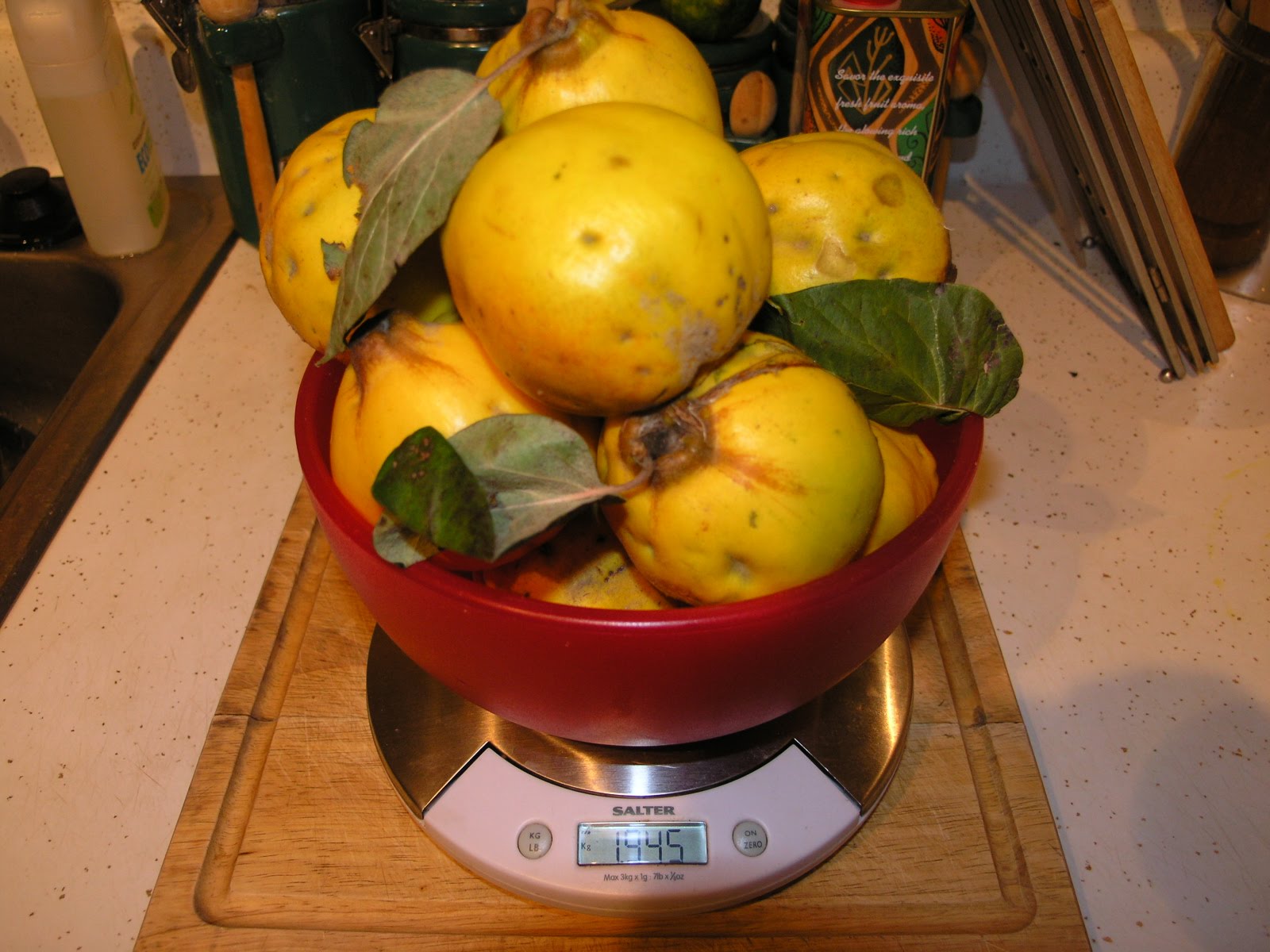
Quincalicious! It's Membrillo!

This recipe began around July when Adam's quince tree showed me that it definitely had some fruit this year. Adam owns and operates Adam's Berry Farm and is our neighbor down in the Intervale. Quinces must be harvested before a frost, and then put in cold storage for about a month before they can be used. I asked Adam if he could part with a few quinces and he gave me the green light to go for it! There was a frost forecasted for October 14, a Wednesday, and I knew this was my day to acquire those amazingly fragrant fruits! I merrily approached the tree only to find that it was completely stripped of fruit! No fruit in sight! I was completely crestfallen - what had happened? I found Adam, who told me that he had his crew take the fruits off since he knew there was a frost coming - they were all safely stored in the cooler. Terrific! All I had to do was wait a month and come up with a recipe for my quinces. I am a big fan of Spanish cuisine, and am always looking for an excuse to make something Spanish - here was a unique opportunity to make one of my favorite Spanish treats - membrillo, quince paste! This is a super-delicious paste made only with sugar and quinces, that gels on its own because of its naturally high pectin content. You slice it into cubes, and then into triangles (tradition alone dictates the shape), and you eat slices with manchego cheese as a tapas dish, dessert, or simply an intermezzo, or in my case a regular snack! A quick search online revealed several identical recipes (pretty clear that there is one way to make it), plus some knowledge about the paste - in Portuguese it's called marmelada, and in fact their word for quince fruit is marmelo - I could hardly wait to see if membrillo tasted remotely like marmelade - one of my favorite sweet spreads. I gathered my equipment and got to it - here's the process:

Peel and chop the quinces. Place in a large pot - 6-8 quarts. I had about 4 pounds of quinces - that was 12 of them.

Add two 2-inch peels of lemon rind - try not to get too much of the white pith.

I added a split vanilla bean, but this is optional. Add water and boil until quinces are fork-tender. This took about 30 minutes for my batch.

Strain the quinces off the liquid. Discard the liquid. Remove the vanilla bean, if using, and scrape out the seeds into the quinces. Leave lemon rind pieces in with the quinces.

Puree the quinces and lemons and vanilla bean seeds together in a food processor until smooth. Measure how many cups of puree you now have. In my case, I had 4 cups. Return to a smaller pot - 3 quart will do nicely, and add the sugar...

The amount of sugar you use depends entirely on the amount of puree you have - they are equal. In my case, I had 4 cups puree - that means I added 4 cups of sugar. Quinces are VERY tart - don't skimp on the sugar - you'll regret it!

Slowly cook the puree over a very low heat for 1 to 1.5 hours. On my electric range, that was on the lowest setting, and with the lid off - seemed to cook it slowly enough. You don't even really want it to bubble. Because of the high sugar content, it could burn easily - slow and low is the key here. Stir often to prevent sticking.

Slowly you will see the magic that is cooking quinces - they turn this lovely rosy deep orange-red color! It a process that, for me, lumps quinces into this category of alchemical cookery; wherin a magical transformation takes place that happens because of the intrinsic nature of the food - sort of like when a natural emulsion occurs between garlic and oil - call me geeky, but food science is fun and provides me with lots of joy!

When your paste is super thick, deep rich in color, you are ready to mold it! Prepare an 8x8 cake pan with pieces of parchment - lightly butter the parchment for ease of removal. In my case, I had some larger pieces in my puree that I wanted to strain out, so I passed it through a mesh sieve before pouring it into my mold so that it was a homogenous consistency. Place in a 250 degree oven for 30 minutes to encourage more drying out, then place on counter until completely cool or overnight.

Et voila! You have made membrillo! Un mold the paste from your pan by lifting out the paste on the parchment sling-like. Cut up and enjoy!

It spreads nicely - and don't forget the manchego for a traditional touch! By the way - it does taste remarkably like a fragrant good marmelade. Makes you wonder if the use of oranges to make marmelade was just trying to mimic the quince paste... sooooo delicious!

For storage, cut up the remaining pieces and layer in an container between parchment. Should keep for several weeks in the fridge. Enjoy!!!!

Wednesday, November 04, 2009

Haygrove Brit Tour - Day 4


Our last day of touring with Haygrove. We saw an incredibly huge strawberry operation with the picking tractors being used that day. That's 56 tunnels in a row - simply stunning! The picking machine was very slow moving, and seemed slightly awkward for the pickers, but they said that it helped tremendously when they had labor shortages last year. Essentially, the picking machines make a bad picker average, which was worth it to the growers when they could hardly get any labor at all. Each picker is laying on an independently articulating bed that they can control with pedals to move forward or backwards to keep up with the picking. This machine cost $90K. Wow. Then we went to another farm that grows a lot of asparagus and potatoes for the local potato chip company. He had some really neat tunnels with great doors that are good for
high-wind areas. The asparagus operation was fascinating - they are able to extend the season and grow out of season - keeping more asparagus in the stores from England rather than Peru - their largest competitors. There's one farm in Peru that has 25,000 acres of asparagus!
Boggles the mind. We really enjoyed this farm - pretty much our first farm with any non-fruit, non-tree produce. Got some ideas for growing smaller, better potatoes - and we were definitely intrigued with the asparagus potential... In the afternoon, we went off to another cherry farm, that was neat and tidy and full of Haygroves! Very picturesque -
made us almost think about growing tree-fruits for a second.... but just for a second! This afternoon we also were treated to a trip to one of the most famous farm shops in the area - Oakchurch started as just a little farmstand and has grown over the years to be this enormous farm store with a very
diversified inventory - everything from house butchered lamb to diamonds. Not joking. They
actually had jewelry, too. Interesting. We were really fascinated and impressed by the great selection of ales, ciders and country wines - not to mention the tons of frozen entrees they make in
house - then there was the pretty cool cheese
counter, too. We were just thrown off by the section with the diamonds - funny inclusion! All in all a terrific trip over the pond - we really enjoyed seeing the Haygrove farm, all of the different structures that were in use - especially the trellis house; very neat! FYI, Haygrove is coming out with a new mini solo tunnel for backyard
gardening use! Keep your eyes peeled for that one - should be a winner! Our drive back to Haygrove and eventually to the airport hotel was complete with a sighting of a caravan of gypsies! They were lining the highway with their caravan - just living there for now. I've always looked at inter-highway greenbelts and thought they should be used for something useful - nice to see them making use! Back home now, preparing to put our farm to bed for the winter, we are hashing over our trip to England and looking forward to another season of growing in our Haygrove tunnel - it's been crucial to our success this year, and know that we'll enjoy growing in it for years to come! Thanks, Haygrove!


Haygrove Brit Tour - Day 3


Today we headed out to Haygrove’s main farm site where they have all the models of their tunnels on display, different crop trials, and their Halo line of poultry structures. We met up with Haygrove’s head agronomist, Graham Moore, who took us all around all day. We started at the cherry trials first, then moved on to more in-ground strawberries, where we learned of the telescoping tunnels, which looked to be a gigantic hassle to us, but was apparently a good deal for others wanting to control the temperature closer to the ground at some stages of a season, then later on, raise the tunnel to cool it off, or give the crop

more head space. Then we moved on to the raspberry trials in the Series 4, or multi-bay tunnels (these are the ones we have). They were incredible! What a neat system! They can get this much growth on these canes in one season – they were the Driscoll’s variety Maravilla, they were huge berries, extremely delicious, and they expected to get another crop off of them the following Spring! It was way cool, though the canes were grown in bags with substrate mix in them, drip irrigated, etc. This allows the tunnel to be used for other things years later, and gives the grower more control with feeding, etc. Very

interesting, and a complete pleasure to walk through that tunnel! We also got so see some pretty cool ways to create the doors on these tunnels, and found the automatic rolling doors to be pretty neat and super convenient – this was also used for the sides. There’s basically any configuration you can do. They have these really great new tunnels called their trellising tunnels that we were completely in love with - they are a bit stronger, and have cross beams that can support a trellising system - it was really neat to see how they did that - it's all tension systems with wires and chains. These tunnels were filled with raspberries too, but they have been used for

tomatoes as well. Intriguing, for sure! The last thing we saw today was the blueberry operation as well as the new super solo structures and the halo chicken structures. A full day capped off with a nice dinner at a local Italian restaurant with the Haygrove crew - a great evening!


Monday, October 05, 2009

Haygrove Brit Tour - Day 2


Today was strawberry day! We spent the entire tour near Dover – we visited 3 farms, one in East Malling which was an agricultural research station, that had some interesting apple, pear, and strawberry trials going on – such a huger scale than we’re used to, but completely interesting; growing strawberries on benches into a peat/compost mixture in plastic bags. They call this substrate farming or table-top farming; with the strawberries up on tables, growing out of peat-filled bags. The berries cascade over the edge, and there's a wire to hold the leaves up. This makes them extremely easier to pick - doubled the picking rates of their crews. It is quite ergonomic - you can just walk through and pick

standing up. We kept trying to think of something that you could grow under the benches... Interestingly, they can reuse the bags 3 or 4 times, which is less wasteful than I originally thought. The focus on sterilizing soil and spraying for every kind of pest is so far out of our purview – such a different way to farm! We’re seeing the Haygrove farm tomorrow, which has some organic growing, so that will be eye opening, I’m sure. At this farm we also met up with a scientist doing research on stressing plants with the irrigation system to reduce water use and improve the taste of various crops without losing yields – essentially the same idea as dry farming,

as far as we could tell. Their tests were promising, they found that with strawberries, they cut water use tremendously (from 70 tons of water per 1 ton harvested fruit per season, to 10 tons water per 1 ton of fruit!), which reduced leaf growth, but didn’t affect the fruit set at all. Pretty neat work being done there – they were also looking into the technique of deficit watering, which stresses the plants further, but tends to make the fruit taste even better. We went to another farm mid-day that also did a lot with strawberries as well as blueberries. They are the primary growers of strawberries for Marks & Spencer, the upscale grocers in the UK. We got to see their packing house, and cold-chain system, which was so eye-opening, mostly because of the amount of

energy these types of operations must take – let alone the time to organize the labor, maintain the equipment, order all of the containers for shipping, then deal with the actual shipping! It boggled our minds! There is certainly a lot to be said about direct marketing, from our perspective, at least! It was fun to share with people that on our operation we do all the planning, ordering, marketing, harvesting, washing, packing and selling – AND make a living on just the two acres. The general consensus here in Britain was that you simply cannot survive without at least 200 acres, and an immigrant workforce (most come from Poland). It is such an interesting mindset and focus here – on big farms. We talked a lot with folks about the local movement in Britain and

everyone said that it is only starting to take hold, and even so, in very small pockets of the country. There is almost no focus on vegetable production here at all – most farmers focus on fruits; cherries, strawberries, blueberries, and apples. We had a fantastic lunch at The Dog Inn at Wingham, our first real pub experience – it was really good! We had fancified normal pub fare, tempura fish (fish & chips), and house-made sausages on a bed of herbed potatoes (bangers & mash). It was quite delicious, and gave us good energy for the last leg of our day. The last farm of the day that we visited today grew cherries with a system called VOEN covers as well as the Haygrove tunnels. His assessment was that growing in the Haygrove tunnels was easier and better, though the

VOEN system used a lot less steel. It is sort of a curtain system that self-vents; great for orchards. This was a long second day, but really informative and gave us something to look forward to tomorrow – seeing the Haygrove farms!

Sunday, September 27, 2009

Haygrove Brit Tour - Day 1

Well, here we are in England! Being that I haven’t written in over a month (embarrassing!), you have no idea why we’re here! We decided to come on a trip with the Haygrove company – the one that helped us to build our ½ acre structure at our farm – which is based here in England, with the intention to learn a lot and stay on the cutting edge of what we’re doing. We haven’t been to England for 12 years (our honeymoon), and were eager to see it again – especially as part of a guided tour! When we were here last, we had a very difficult time getting around due to the “too-young-to-rent-a-car” clause, and spent a considerable amount of time figuring out the trains and bus systems. We looked forward to arriving and being catered to! We had a whole day in London to ourselves, before heading out to Kent, so we of course found a farmers’ market being held on the South Bank of the Thames – the Borough Market. Two words: foodie paradise!
What a neat space; no doubt there were some produce distributors present, but there seemed to be a genuine interest in keeping it as local and producer-based as possible. There were tons of local cheeses, meats, fruit & veg (as they say here) as well as international foods. We chose to tackle a chorizo/pequillo sandwich for lunch at the Spanish stand – clearly the most popular food stand at the market, with the longest line (cementing for me the notion that Spain is on the cutting edge of all areas of food!). Delicious! I was able to snag some dry Spanish peppers for seeds at this stand as well – a seed searcher never rests! We spent the rest of the day cruising around
on double-decker buses taking in the sights and trying to stay awake to make sleeping later on much more effective. I fell asleep on the riverboat cruise, but right after that it was time to head to Victoria station to catch our train to Kent. General observation of London – there is tons of food (really heavy food) to eat always at your fingertips! Yet, there are no fat or obese people that we saw. Could it be that the whole eating culture of London – always having food available, means you can grab a bite when you have the vaguest notion of being hungry, thereby staving off hunger, thereby staving off binge behavior – you never get so hungry that you have to gorge
when you finally get near food - thereby staving off crankiness, thereby creating this general air of politeness, and general good cheer. Everyone we met was trim, in good spirits and eating something. I’m still working on this assessment – perhaps it will change as we go along…

We made our way to the village of Bobbing, in Sittingbourne, Kent. Too exhausted to figure out another eating option, we ate at the restaurant situated next door to our hotel, it was called the Bobbing Apple. We were amazed at how similar this restaurant was to something like a TGI Fridays! We ate as locally as we could and ordered the fish & chips. One thing is for sure – the Brits know how to fry a piece of fish! A splash of malt vinegar on the chips (fries), et voila! The perfect post-travel-been-up-for-over-24-hours-dinner! Gotta say, it sure hit the spot! Eager to get to bed to be able to wake up and meet the rest of the tour group, we hit the sack…

We awoke and decided to go for a run and explore our surroundings. There was a really nice footpath that we could catch right outside our hotel, thankfully, and while I ran my morning 5k, Spencer took his morning constitutional. It was perfect weather and we passed by several farms, some wild damson plum trees (plucked a few and downed those), wild raspberries (past ripe), and a beautiful apple orchard surrounded by a barbed-wire fence (blast!). Gorgeous morning – off to continental breakfast, a pot of Earl Grey tea, toast with black currant jam, and some organic yogurt – English cooked breakfast not an option this morning, will hope for it tomorrow (must have baked beans with my stewed tomato and eggs!)!

While waiting around for the Haygrove reps to come take us to Leeds Castle (the only agenda item that day), we met the other growers on this tour and quickly realized at what a completely different scale we are farming than all of them! Two guys from Florida, growing blueberries on 600 acres (!) and shipping globally (!), two guys from Michigan looking to grow cherry trees under cover, but already growing other things on 200 acres (!). One other guy from Oregon that already has about 100 irons in the fire also looking to put cherry trees under cover. All of these guys use an immigrant/migrant labor force, have an incredible overhead in massive amounts of equipment (berry pint filling machines!) I must say, I’m mighty proud to be able to tell all these guys that we are making a living on 2, count ‘em, TWO acres, with two people plus a little harvest help. Their jaws drop, and all of them resolve to get smaller one day. The smaller, concrete scale is so much easier to swallow. What a great day we had chatting with these guys whose favorite topic happens to be our favorite topic, too! Let’s just say there’s never a break in conversation, really – we’re all so interested in the different models of farming and different trends in consumer habits – it provides endless hours of discussion time! Oh yeah, and the Leeds Castle was quite nice, too and the weather couldn't have been more perfect! Tomorrow we get to see some Haygrove operations here – we’ll post pictures as soon as we have them!