Monday, March 26, 2007

Spring Has Sprung!

Well, a lag in the posting due to Spring officially arriving, the greenhouses officially opening, and planting officially commencing! We are finally farming again - a much-anticipated annual cycle. We have some really fun crops this year, including: okra, shell peas, and tons of heirloom tomatoes, colorful cherry tomatoes, tons of fingerling potatoes, greens galore and all the peppers you could want! This time of year is so great - all the anticipation and potential for success. It's such nice time before anything has gone wrong; pests, floods, too much rain, too much sun, irrigation pump snafus, etc. Right now from where I'm sitting, everything looks pretty rosy! Plus, the snow's almost all gone! Also part of my rosy outlook: I can face mudseason with my newly purchased Muck Boots! They are fantastic - I feel practically invincible in them!


Some pics to show the process:


The seeds arrive and we begin the organization process

The snow is finally almost gone - there was easily 3 feet of snow here just 2 weeks ago!

The seeding begins!

Microgreens seeded...

...and one week later! One week to go until we harvest!

Barlettas - a fantastic white pearl onion.

The golden beets are up!

Mache - our specialty French green. This is the first time we've grown it when it's supposed to grow; the winter. We planted it in the hoophouse in November, and planned to harvest it now-ish. As you can see, it's ready! We made our first sale of the year today to Healthy Living Market - a whole 2 weeks earlier than last year! This was a fun project!

Tuesday, March 06, 2007

A Terroir-ist's Manifesto

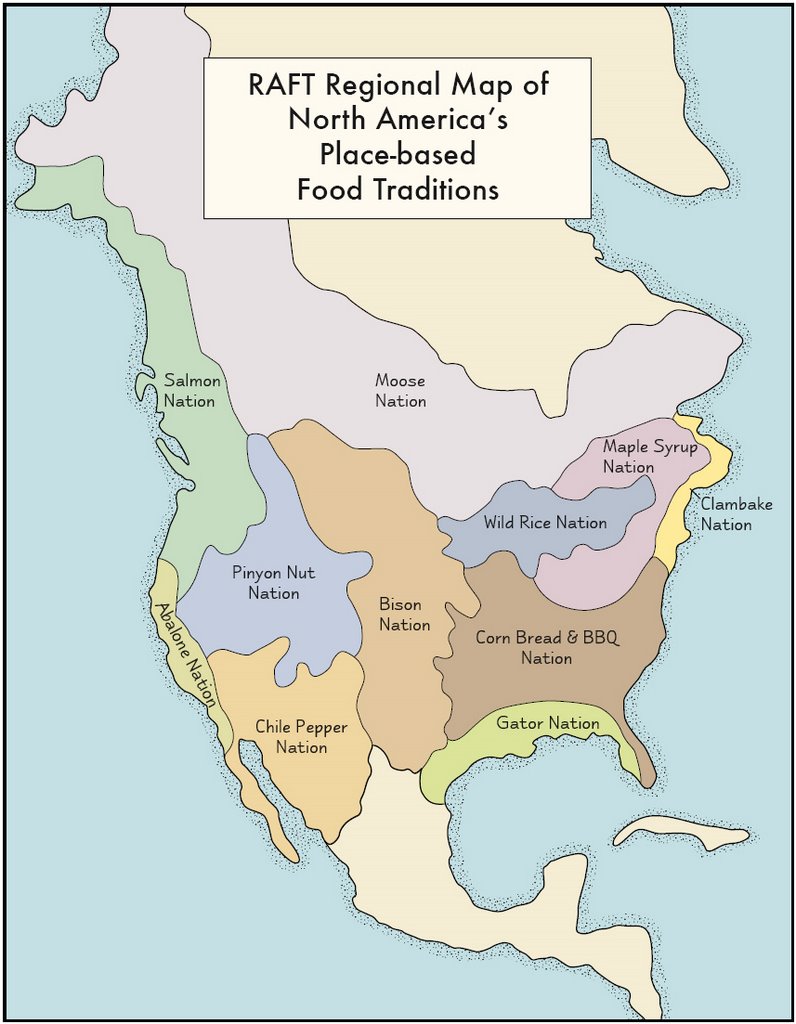
Thought I'd share this with you - nicely outlines the purpose of the RAFT project (Renewing America's Food Traditions), which we are heavily involved with this year. The author of the Terroir-ist's Manifesto is Gary Paul Nabhan, who will be our speaker this year at the Vermont Fresh Network Forum in August. This forum will be serving as the first National RAFT Picnic, where we will be enjoying chef-prepared local-indigenous foods grown out by Vermont farmers. I am in charge of getting the Vermont Farmers the lists of our indigenous varieties to grow-out the crops in time for our picnic this year. If you want to download the RAFT book, you can easily do that here (just scroll to the bottom of the page). Enjoy!

A Terroir-ist’s Manifesto For Eating in Place
Renewing America’s Food Traditions

Know where your food has come from
through knowing those who produced it for you,
from farmer to forager, rancher or fisher
to earthworms building a deeper, richer soil,
to the heirloom vegetable, the nitrogen-fixing legume,
the pollinator, the heritage breed of livestock,
and the sourdough culture rising in your flour.

Know where your food has come from
by the very way it tastes:
its freshness telling you
how far it may have traveled,
the hint of mint in the cheese
suggesting what the goat has eaten,
the terroir of the wine
reminding you of the lime
in the stone you stand upon,
so that you can stand up for the land
that has offered it to you.
Know where your food has come from
by ascertaining the health & wealth
of those who picked & processed it,
by the fertility of the soil that is left
in the patch where it once grew,
by the traces of pesticides
found in the birds & the bees there.
Know whether the bays & shoals
where your shrimp & fish once swam
were left richer or poorer than before
you & your kin ate from them.

Know where your food comes from
by the richness of stories told around the table
recalling all that was harvested nearby
during the years that came before you,
when your predecessors & ancestors,
roamed the same woods & neighborhoods
where you & yours now roam
Know them by the songs sung to praise them,
by the handmade tools kept to harvest them,
by the rites & feasts held to celebrate them,
by the laughter let loose to show them our affection.

Know where your foods come from
by the patience displayed while putting them up,
while peeling, skinning, coring or gutting them,
while pit-roasting, poaching or fermenting them,
while canning, salting or smoking them,
while arranging them on a plate for our eyes to behold.
Know where your food comes from
by the slow savoring of each and every morsel,
by letting their fragrances lodge in your memory
reminding you of just exactly where you were the very day
that you became blessed by each of their distinctive flavors.

When you know where your food comes from
you can give something back to those lands & waters,
that rural culture, that migrant harvester,
curer, smoker, poacher, roaster or vinyer.
You can give something back to that soil,
something fecund & fleeting like compost
or something lasting & legal like protection.
We, as humans, have not been given
roots as obvious as those of plants.
The surest way we have to lodge ourselves
within this blessed earth is by knowing
where our food comes from.

Gary Paul Nabhan, January 2007

Monday, March 05, 2007

Farmers of the Future!

Our local paper, the Seven Days did a nice article and decided to include us in it. It talks about how young folks are trying their hand at farming, and making a decent living at it. We're proud to be one of the profiled farms. Stay tuned for a front-page article in Cornell University's Small Farm Quarterly coming up in April! Click Here to go to the article online.

Monday, February 19, 2007

Winter Wonderland

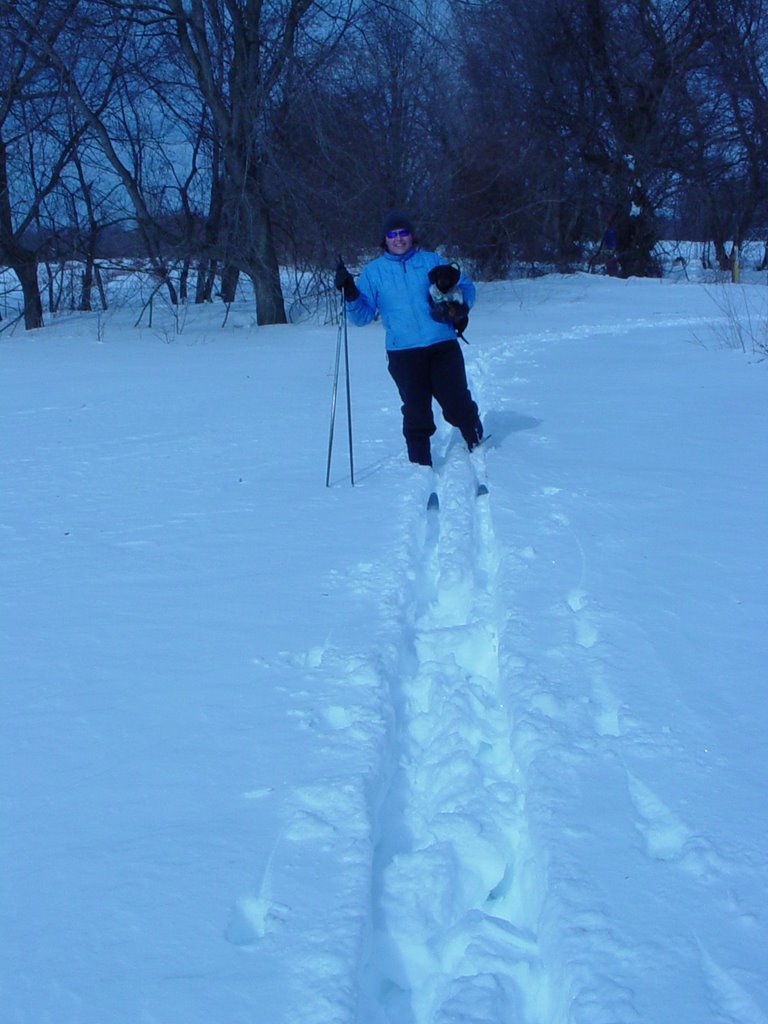
We can hardly get enough of all of this snow! Mr. Smeems is quite taken with it as well! We finally, after years of hemming and hawing (sp?) about getting our own x-country equipment finally bought our own gear. It really has been wonderful going down to the Intervale and interacting with that environment this time of year. We finally ordered all of our seeds last week, and continue to work on the house process, meanwhile....let it snow!

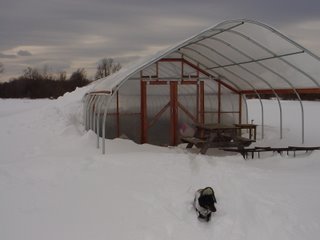
Mr. Smeems tunneling through 3' of snow at the farm


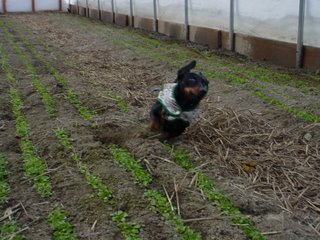
Mr. Smeems getting back to his burrowing roots!

Mr. Smeems warming up in the hoophouse

The field in winter

Tuesday, February 13, 2007

Home is where the revolution is

Well, well, well! We have officially reached our personal 5-year goal! Our vision was to farm on 1 acre by ourselves and make enough money to put a down payment on a house. That vision was officially realized yesterday when we signed a contract for a 3 bedroom ranch in a great neighborhood here in Burlington! We expect to move in mid-April after we re-do the floors and update it a bit. We are quite excited and can barely believe it's happening. It has been such an amazingly surreal winter for us with so many major changes in our life beginning with Terra Madre in Italy, the unexpected death of Mara's father before Thanksgiving, the long drives between Denver & Burlington over the holidays, the amazing PASA conference, planning meetings with chefs and wholesalers for the season, ordering 215 varieties of veggies from new seed sources, getting involved deeply with the Slow Food Vermont movement, Spencer taking an Organic Chemistry class for fun, Mara taking an Auto Shop class for fun, buying a home, hiring an employee and deciding to get a friend for Mr. Smeems, our dachshund! To say the least, we are reeling a bit, but know that we've been making good choices along the way and have been enjoying being a part of Mara's strong and supportive family during difficult times.
One of the main reasons for buying a house was to have an extensive dining area so that we can host dinners and discuss the food revolution with our friends, customers, chefs and other folks that are interested in this great food movement. We have definitely outgrown our 400 square feet at the housing co-op that we live in, and can't wait to share our new home with you! More pictures to come as we go through the inspection process and updating process this Spring!
Some more house pictures!
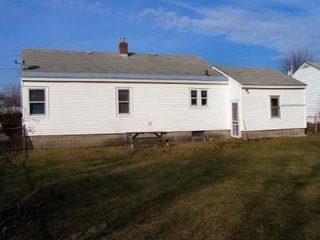
The backyard, which is begging for a deck and a door from the middle section - the dining room.

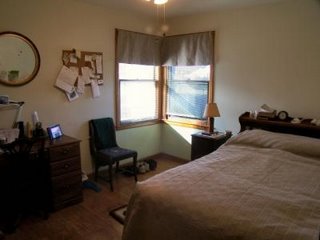
Two big bedrooms like this one

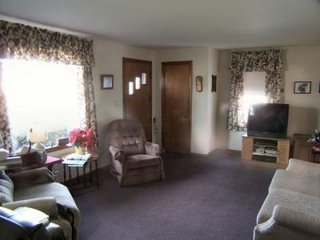
The living room has hardwood floors under this carpet, and saloon doors to the hallway!
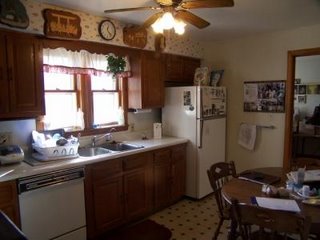
The kitchen is in need of updating, but is great for now. The room off to the side is technically a third bedroom, but will be our formal dining room. This is the room that will open to the backyard.
Tuesday, February 06, 2007

Our "Occupassion"


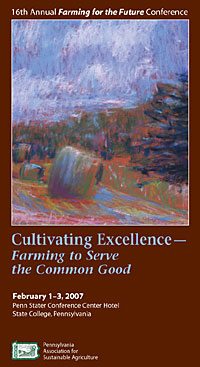
PASA 2007 is over, and boy are we jazzed to start our season! We met some tremendous folks (as always), and learned a lot (as always)! We gave three presentations this year - the titles are as follows: "We Made $50K on one Acre!!", "The Nuts & Bolts of Small-Scale Microgreens Production", and "Farm Market Stands That Sell!". All were well attended, and you can get a CD recording of each of these sessions as well as a DVD recording of the $50K talk! There were some fantastic keynote speakers this year - all with a slightly different message: James Howard Kunstler, Joel Salatin, and Michael Abelman. All are heroes of ours and all are quite good speakers. The PASA conference boasted 1700 attendees this year, coming from every state and 4 countries! The dynamic demographic of this conference is always something to behold, and gives us hope for this food movement we are a part of. I said earlier in our blog concerning the Terra Madre conference in Italy, that it is amazing that they can pull together so many people with just 30 folks organizing the conference. Well, PASA gives me hope that us Americans can do the same thing - the total conference organizers for this conference is something in the vicinity of 5 people! They really pull it off well with stellar speakers and great folks in the trade show as well. We loved the rally cry from Joel Salatin - who suggests that we should "opt out" of conventional agriculture and the current food system we have. He reminded us that what sets us modern-day sustainable farmers apart from our conventional farmer counterparts is that what we have is an "occupassion" that is hard to squelch. The energy generated from our occupassions is what is going to help us to change the face of our food systems forever. Then we heard from James Howard Kunstler, who gave us the hard future vision of a society that needs to source everything locally because of peak oil and the rape of the American Landscape. He is the author of The Long Emergency and is quite the grumpy curmudgeon, but at least he's thought out his vision thoroughly and has some suggestions for us. Our last keynote speaker was Michael Abelman, who we've seen speak before, and he reminded us that what us farmers are doing is great and exactly what we should be doing to tie us to our communities and to our landscape. His most recent book Fields of Plenty highlights a summer-long tour across the US with his son to seek out farms and see what folks are doing out there. It's inspirational and reminds me why we do what we do. So! To say the least, we are excited and invigorated with all of our interactions over the weekend, and hope to bring that energy to the Slow Food VT dinner being held at Mary's at the Inn at Baldwin Creek this Thursday. Keep checking back for updates on upcoming Slow Food and VFN events! Some other pictures of the PASA conference:

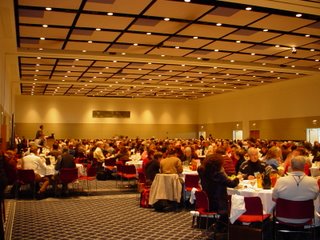
The conference hall were we were fed all PA products from PASA member farms!
More pictures to come!

Tuesday, January 23, 2007

Slow Food Nation

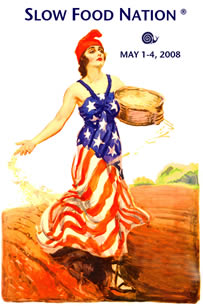
So Slow Food USA has launched their idea for their version of Terra Madre: it's called Slow Food Nation, and it's set for May 1-4, 2008 in San Francisco. I have been mulling over this idea, and I still think that if Slow Food USA would like to create a nation-wide event to celebrate our heritage foods and food traditions, then it should be held in every USA Food Nation, and we should simulcast it on The Food Network around the globe! OK, so maybe I have grander visions than what is immediately possible, and I guess having something in San Francisco is a start, at least.

So, what is Slow Food Nation? Here's the blurb from the Slow Food USA site:
"
How is a heritage turkey different from its factory farm counterpart? What is a Blenheim apricot and why should we preserve it for posterity? How can we all enjoy local, affordable, and sustainably produced food? The answers will be apparent at the first Slow Food Nation, a celebration of American food organized by Slow Food USA for May 1-4, 2008 in San Francisco.
San Francisco is poised to be at the center of a movement with global implications. Experts such as Alice Waters and Michael Pollan, author of The Omnivore’s Dilemma, are anchoring the task force planning the four-day celebration, which will embody the values of the Slow Food movement and illustrate how food and agriculture form a complex global tapestry of cultural, political, and environmental issues. In addition to education through taste, the event will offer a wide range of activities for all ages, including talks, forums, workshops, and films that will teach people the importance of preserving traditional foods and production techniques—and alert them to the broader implications of their eating choices.

A marketplace of over two hundred farmers and artisans from across the country will showcase the range of traditional American foods. Attracted by the simple pleasures of the table, participants will leave having learned how American food production affects global issues, including greenhouse gas emissions, childhood obesity, famine in the developing world, and the disappearance of the small farmer. Attendees will emerge with a broad-based vision of the life-enriching benefits of a sustainable approach to food and life, as well as the tools and personal connections to implement that vision.

Questions about Slow Food Nation? Please contact the Slow Food Nation office:
The Dante Building1606 Stockton Street , Mezzanine San Francisco , CA 94133
slowfoodnation@slowfoodusa.org"

At any rate, it should be interesting to see what kind of producers they get from other parts of the nation May 1-4.... stay tuned for more updates about this incredible endeavour!

Monday, January 22, 2007

Slow Food, Slow Winter

After a long hiatus filled with family obligations, three blizzards in our home state of Colorado, cross-country road travel, and lots of holiday eating, we have finally returned to Vermont, and Vermont has finally returned to winter. I must admit, it is so nice to finally have some snow here in Vermont - now we can snowshoe, x-country ski, and calmly search through those seed catalogs without feeling the urgency of those 50 degree days that felt like Spring. No, we're definitely here, the dead of winter. But, ever since December 20th, we have been marching slowly toward the light and winter doesn't feel so bad. It's also conference season here in the world of farming, and we've just finished attending a NOFA sponsored marketing conference, and are heading to PA for the PASA Farming for the Future conference February 1-4. We're giving 3 talks this year, which we're excited about. Even more exciting is the Terra Madre Reunion Dinner being held at Mary's at the Inn at Baldwin Creek on Thursday, February 8th.

This reminds me of the very exciting Slow Food Movement, which continues to build momentum. Tuesday, January 23rd, I'm meeting with the Vermont Fresh Network folks to help plan the first RAFT (Renewing America's Food Traditions) picnig to be held this summer, which will be leading the way towards a huge national RAFT picnic held in 2010! I'll post my notes here after the meeting, and after the idea has been fleshed out a bit more. Delicious food and exciting events await!

Saturday, December 23, 2006

Successful Cultural Exchange

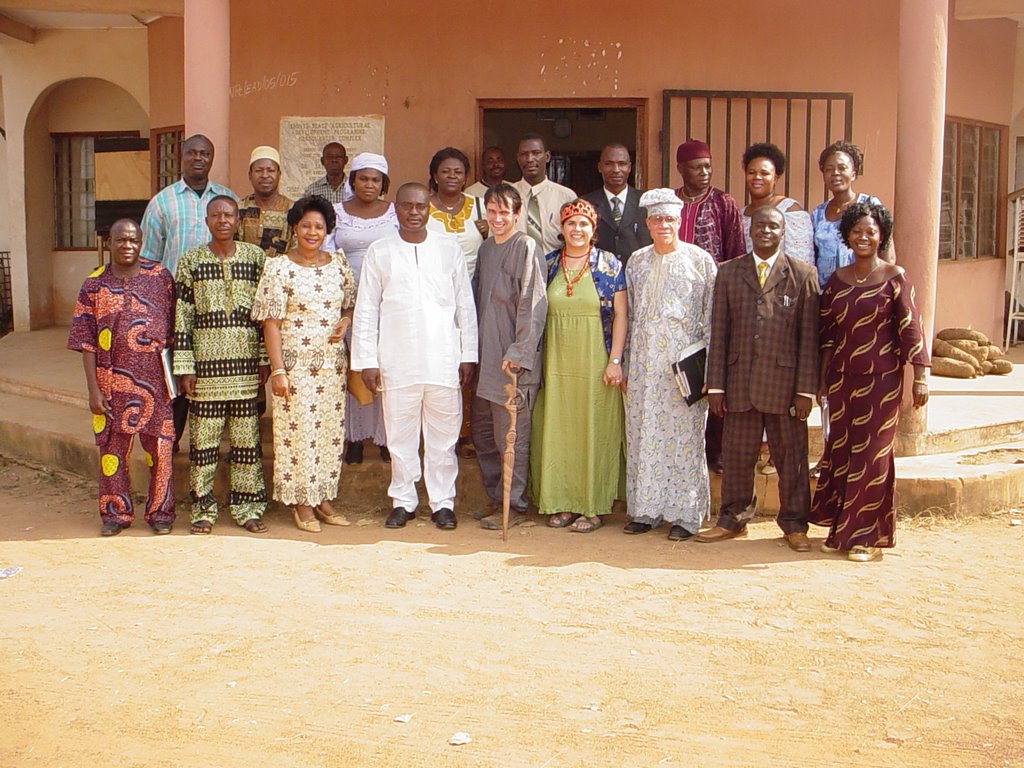
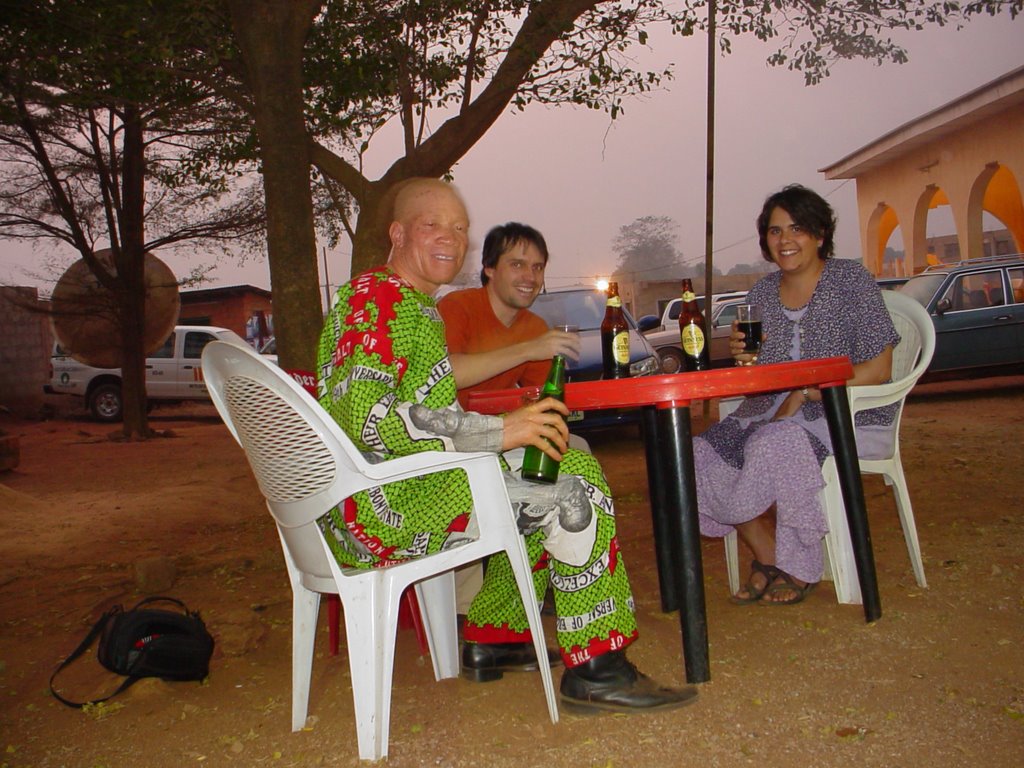
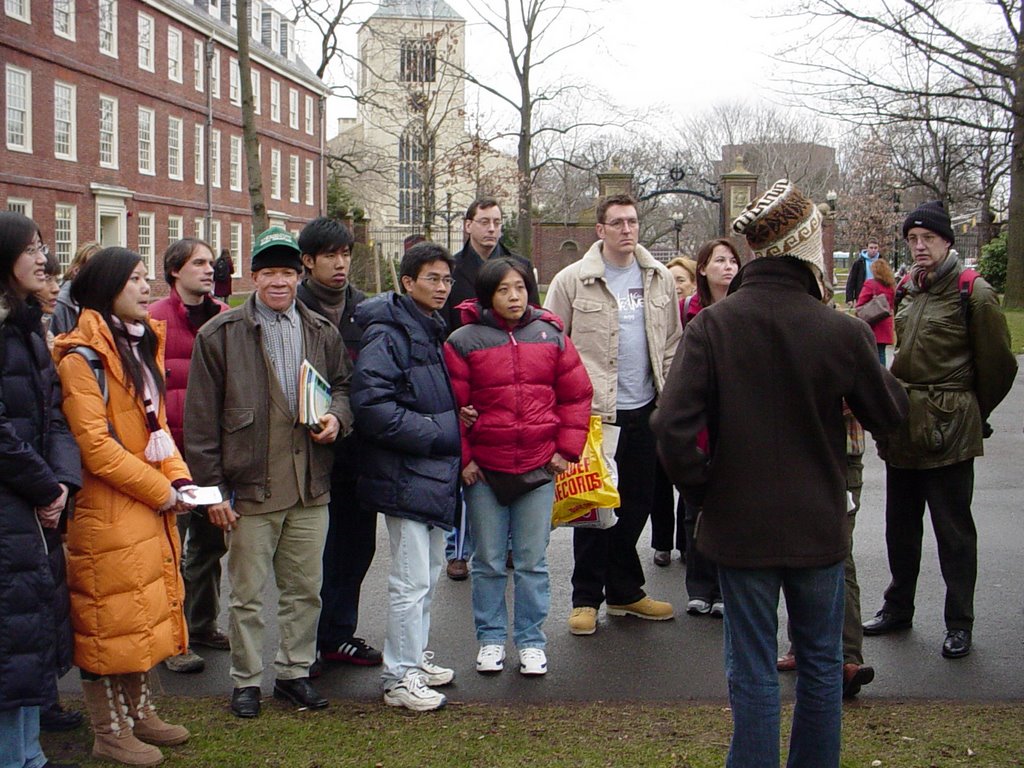
We have enjoyed going to other countries and doing development work because of the people we meet. We are usually drawn to programs because of the projects they are doing, then we arrive and meet so many amazing people that our focus on the project usually transfers to a focus on the the people, their lives and their personal projects. We had such an experience a year ago in Nigeria. Our project was the FarmServe Africa program through USAID in Ebonyi State, Nigeria. We were to work with farmer cooperatives and share knowledge about beekeeping and solar dehydration. The farmers we met were extremely motivated and very interested in anything we wanted to share with anyone. The person we spent the most time with was Cletus Nwakpu, the Director of Rural Community Development at the Agriculture Development office (the same as our Ag Extension offices). He is also a PhD in Agricultural Economics, and so we had tons of fodder for late-night, post-workshop discussions at the local club. During these talks we kept saying how much Cletus would get out of coming to America, and so we dreamt. He called us in November 2006 and said he was coming in 2 weeks for 10 days! We quickly scrambled to find lots of inspirational things for him to experience, and so we did. A brief view of his itinerary for interest's sake: We went to Half Pint Farm and shared the structure of our cooperative model with 13 farms; we organized a breakfast meeting with one of our state representatives, Mark Larson, who Cletus asked so many questions of - he is so curious about how our society organizes itself governmentally. Then Spencer organized a meeting with 2 professors of agricultural/environmental economics at UVM. They hit it off tremendously and talked for nearly 3 hours! Then we went on the necessary tour of all things Vermont; Shelburne Farms, cider mill, Ben & Jerry's, and ski resorts (which had no snow!!!). Then we drove down to Massachusetts to spend time at Harvard University, which Cletus HAD to see. We went on a tour and experienced the campus all day. We spent the night at Mara's brother Phil's house, and the next day went directly to New York City. He could barely believe all of the tall buildings, the cars and all of the people! He experienced public transportation, crowded streets, a ferry ride to the Statue of Liberty, and NYC pizza! All in all it was a terrific trip with tons of experiences and successful cultural and vocational exchanges. His next big project is a paper and a presentation on farmer cooperative models, based on his experiences here in the US. It was really gratifying to finally have a complete exchange with one of the amazing people we've met from all of our travels. We truly believe that he'll have lots of fun sharing his experiences with his colleagues and his family. Thanks for coming, Cletus!

Some other fun pictures of the visit
Cletus, Spencer & Hank Bissell, who gave us a great tour of Lewis Creek Farm.

Cletus meeting some sheep at Shelburne Farms.

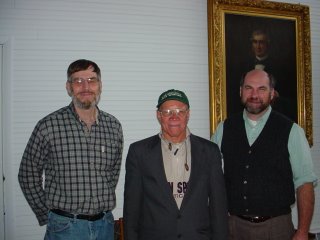
Bob Parsons, Cletus and Ken Becker at UVM - kindred spirits.
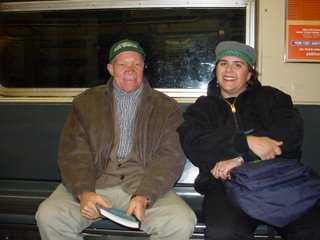
On the subway in NYC.

Eating at John's Pizza in Greenwich Village - his last day in the US.
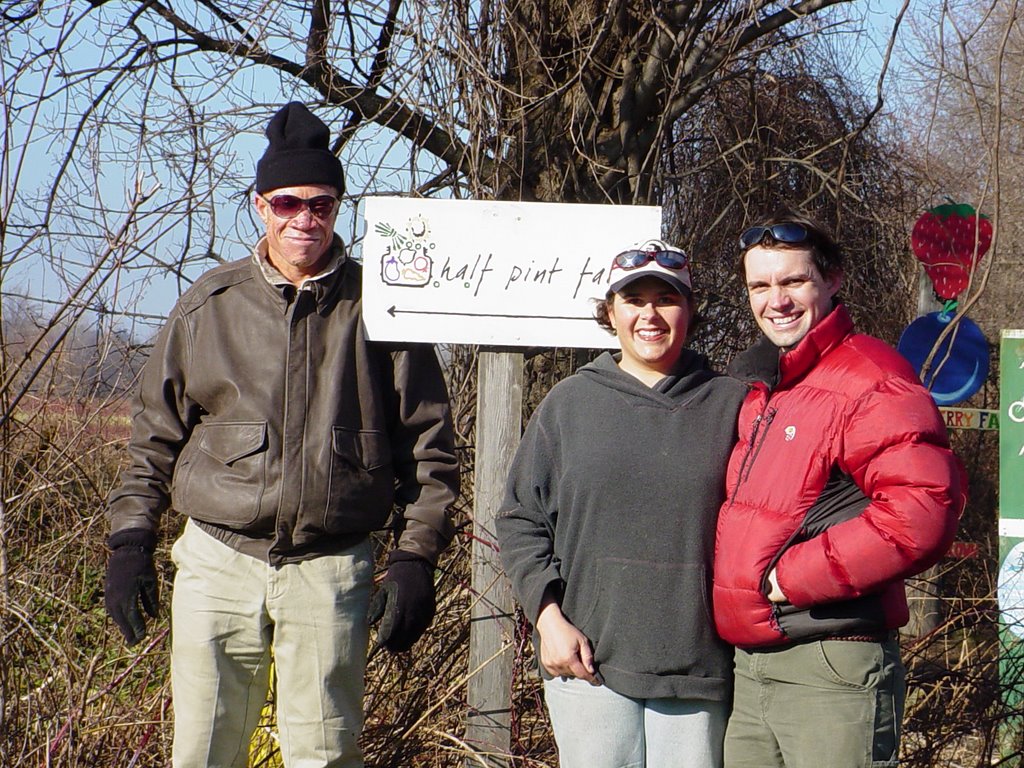
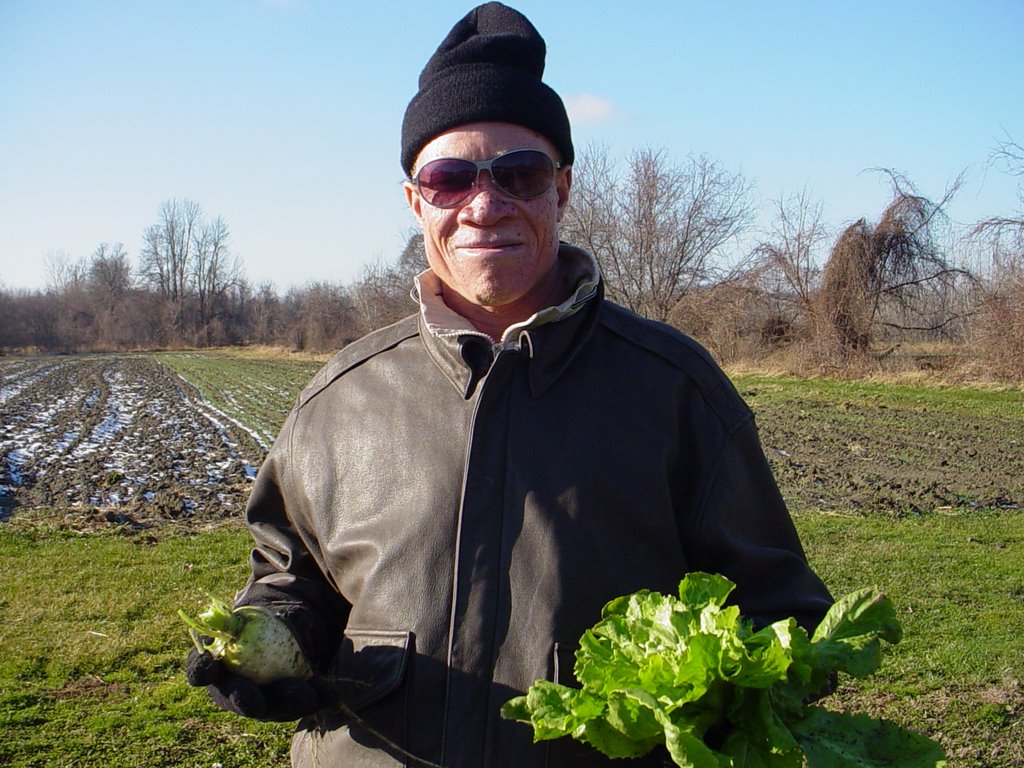
Tuesday, December 12, 2006

Visit From Nigeria

After a long delay, we have some farm news to report - we are hosting a friend we made last year this time when we went to Nigeria with the FarmServe Africa program (a project of USAID). His name is Cletus (pron. clay-toos) Chukwma Nwakpu. He is a rice farmer who works for the Agriculture Extension office in his state, in addition to these great credentials, he's also a PhD in agricultural economics! He was a generous host during our stay in Nigeria, and we are relishing the opportunity to share America with him. We have been talking nonstop - he has questions about everything, and we are really enjoying taking the time to explain things like: snow, the hundreds of different foods, farm cooperatives, CSAs, crosswalks, money exhange rates, and jet lag! He is an extremely bright individual, and we have had some terrific discussions. One thing that we loved about visiting Nigeria was that no subject was taboo to talk about - we were asked about everything under the sun; politics, corruption, religion, the list goes on and on. That trend continues while he is here - it is quite refreshing to not have to tiptoe around issues and really talk about all of the hard ones. The Nigerians we met were very motivated individuals as well as very inspired to learn about anything they possibly can. Our projects while we were in Nigeria were beekeeping (Mara) and solar food dehydration (Spencer). Cletus reports that several farmers we came into contact with are using the techniques we shared with them to great success. It's not too often in development work that folks really try what you teach! Having Cletus visit us is a reminder that all our efforts in farming and development work really are worth something and we can make a difference in people's lives, not to mention our own. Among his favorite things we did today: a visit to Half Pint Farm and the Intervale - though cold and barren, we still have escarole and cut some for dinner. Weeding the mache in the greenhouse at our field. We checked out the big lake here in Burlington - Lake Champlain. More to come as he meets more people in our lives here in Vermont. Happy Holidays!